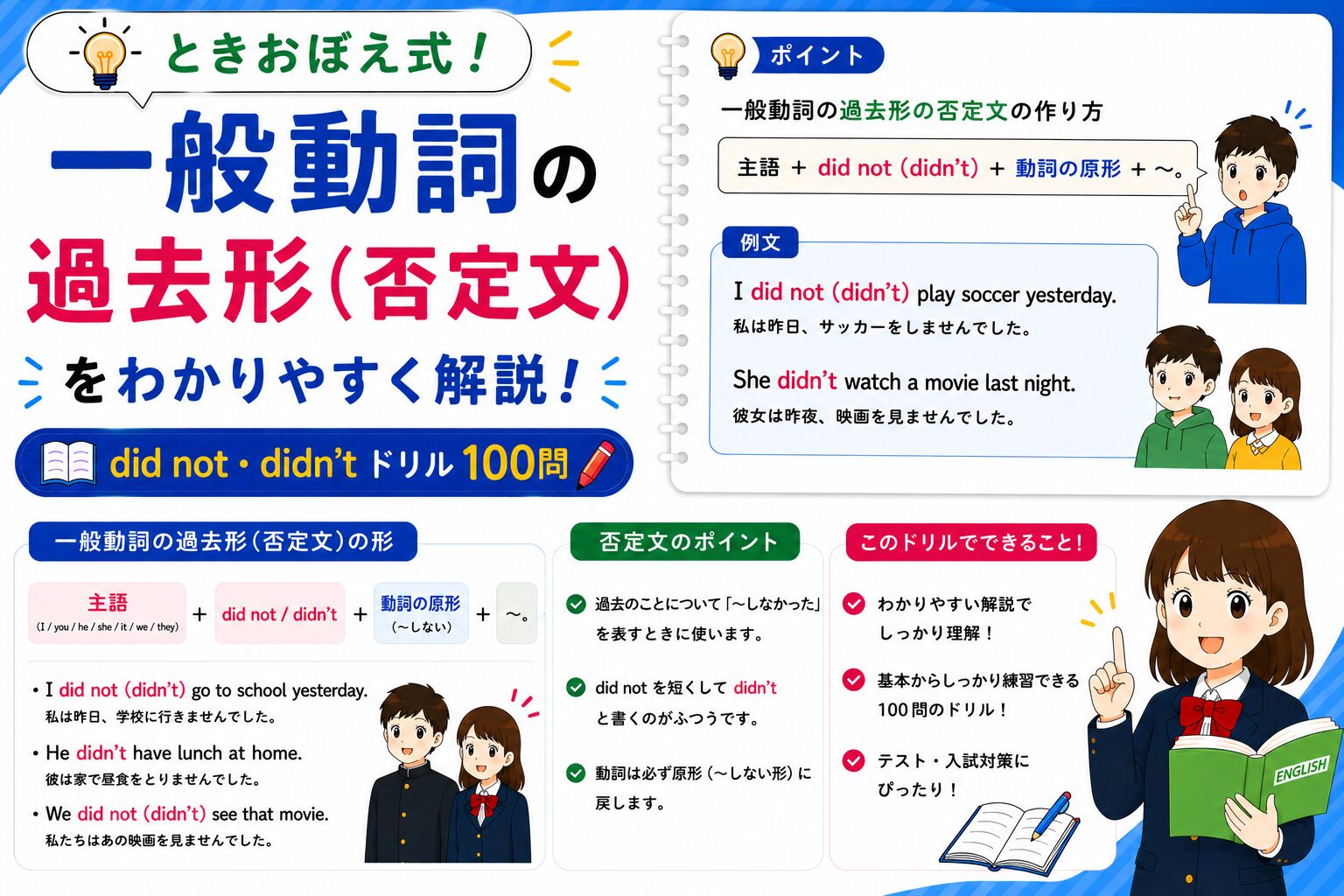
一般動詞の過去形の否定文は、現在形の否定文よりもシンプルな文法です。
現在形では、
- I do not play tennis.
- He does not play tennis.
のように主語によって形が変わりました。しかし過去形では、主語が何であっても did not を使います。
また、肯定文では played や went のように動詞を過去形にしましたが、否定文では did not の後ろを必ず動詞の原形 にします。
そのため、本来であれば三人称単数とそれ以外を分けて学習する必要はありません。
しかし中学生は現在形の学習内容に引っ張られて、
- He didn’t played tennis.
- She didn’t went to school.
のようなミスをしやすいものです。
そこでこの記事では、学習効果を高めるために、あえて「三人称単数以外」「三人称単数」「不規則動詞」に分けて練習します。
さらに、実際によく使われる短縮形 didn’t やシャッフル問題にも取り組みながら、過去形の否定文をしっかり定着させていきましょう。
STEP1 主語が三人称単数以外の否定文に慣れよう
一般動詞の過去形の否定文は、主語が変わっても did not を使います。
まずは I、you、we、they を主語にして練習しましょう。
また、did not の後ろは必ず動詞の原形になります。
問題(1〜10)
- 私は昨日テニスをしませんでした。
- あなたは昨夜テレビを見ませんでした。
- 私たちは先週英語を勉強しませんでした。
- 彼らは日曜日に野球をしませんでした。
- 私はその本を読みませんでした。
- あなたたちはその公園を訪れませんでした。
- 私たちは昨日の朝早く起きませんでした。
- 彼らはその映画を楽しみませんでした。
- 私は夕食の後に宿題をしませんでした。
- あなたはその歌を聞きませんでした。
解答(1〜10)
- I did not play tennis yesterday.
- You did not watch TV last night.
- We did not study English last week.
- They did not play baseball on Sunday.
- I did not read the book.
- You did not visit the park.
- We did not get up early yesterday morning.
- They did not enjoy the movie.
- I did not do my homework after dinner.
- You did not listen to the song.
問題(11〜20)
- 私は先月京都へ旅行しませんでした。
- あなたたちは昨日自転車に乗りませんでした。
- 私たちはその質問に答えませんでした。
- 彼らは放課後サッカーをしませんでした。
- 私はその店で何も買いませんでした。
- あなたは朝食を食べませんでした。
- 私たちはそのコンピューターを使いませんでした。
- 彼らはその部屋を掃除しませんでした。
- 私は友達に手紙を書きませんでした。
- あなたたちは昨日音楽を聞きませんでした。
解答(11〜20)
- I did not travel to Kyoto last month.
- You did not ride a bicycle yesterday.
- We did not answer the question.
- They did not play soccer after school.
- I did not buy anything at the store.
- You did not eat breakfast.
- We did not use the computer.
- They did not clean the room.
- I did not write a letter to my friend.
- You did not listen to music yesterday.
STEP2 主語が三人称単数の否定文に慣れよう
現在形では、
- He does not play tennis.
- She does not study English.
のように、三人称単数では does not を使いました。
しかし過去形では、
- He did not play tennis.
- She did not study English.
となり、三人称単数でも did not を使います。
また、肯定文では played や watched のように過去形になりましたが、否定文では did not の後ろを必ず動詞の原形にします。
問題(21〜30)
- 彼は昨日テニスをしませんでした。
- 彼女は昨夜テレビを見ませんでした。
- 彼は先週英語を勉強しませんでした。
- 彼女はその本を読みませんでした。
- 彼は昨日早く起きませんでした。
- 彼女はその映画を楽しみませんでした。
- 彼は放課後サッカーをしませんでした。
- 彼女は朝食を食べませんでした。
- 彼はそのコンピューターを使いませんでした。
- 彼女は昨日音楽を聞きませんでした。
解答(21〜30)
- He did not play tennis yesterday.
- She did not watch TV last night.
- He did not study English last week.
- She did not read the book.
- He did not get up early yesterday.
- She did not enjoy the movie.
- He did not play soccer after school.
- She did not eat breakfast.
- He did not use the computer.
- She did not listen to music yesterday.
問題(31〜40)
- その犬は昨夜ほえませんでした。
- 彼は先月京都を訪れませんでした。
- 彼女はその質問に答えませんでした。
- その店は日曜日に開きませんでした。
- 彼は友達に手紙を書きませんでした。
- 彼女はその部屋を掃除しませんでした。
- その列車は時間どおりに到着しませんでした。
- 彼はその店で何も買いませんでした。
- 彼女は昨日自転車に乗りませんでした。
- その赤ちゃんは昨夜泣きませんでした。
解答(31〜40)
- The dog did not bark last night.
- He did not visit Kyoto last month.
- She did not answer the question.
- The store did not open on Sunday.
- He did not write a letter to his friend.
- She did not clean the room.
- The train did not arrive on time.
- He did not buy anything at the store.
- She did not ride a bicycle yesterday.
- The baby did not cry last night.
STEP3 不規則動詞の否定文に慣れよう
不規則動詞の否定文は、中学生が最も間違えやすいポイントです。
たとえば、
- go → went
- see → saw
- eat → ate
- have → had
のように、肯定文では特別な過去形になります。
しかし否定文では、
- He did not go.
- She did not see.
のように、did not の後ろは必ず原形になります。
did not went や did not saw にはならないことを意識しながら練習しましょう。
問題(41〜50)
- 私は昨日学校へ行きませんでした。
- 彼はその映画を見ませんでした。
- 彼女は朝食を食べませんでした。
- 私たちは昼食を食べませんでした。
- あなたはその答えを知りませんでした。
- 彼らは宿題を持っていませんでした。
- 彼は昨日家に来ませんでした。
- 彼女はその本を買いませんでした。
- 私たちはその歌を聞きませんでした。
- あなたは英語を話しませんでした。
解答(41〜50)
- I did not go to school yesterday.
- He did not see the movie.
- She did not eat breakfast.
- We did not eat lunch.
- You did not know the answer.
- They did not have homework.
- He did not come home yesterday.
- She did not buy the book.
- We did not hear the song.
- You did not speak English.
問題(51〜60)
- 彼は昨夜夕食を食べませんでした。
- 私はその店へ行きませんでした。
- 彼女はその質問に答えを知りませんでした。
- あなたたちは昨日その先生に会いませんでした。
- 彼らはそのコンピューターを持っていませんでした。
- 私たちはそのニュースを聞きませんでした。
- 彼はその手紙を書きませんでした。
- 彼女は昨日早く来ませんでした。
- あなたはその本を読みませんでした。
- 彼らは日本語を話しませんでした。
解答(51〜60)
- He did not eat dinner last night.
- I did not go to the store.
- She did not know the answer to the question.
- You did not meet the teacher yesterday.
- They did not have the computer.
- We did not hear the news.
- He did not write the letter.
- She did not come early yesterday.
- You did not read the book.
- They did not speak Japanese.
STEP4 短縮形 didn’t に慣れよう
STEP3までの学習で、一般動詞の過去形の否定文は、肯定文よりも簡単に作れることが分かったと思います。
肯定文では、
- go → went
- see → saw
- eat → ate
のように動詞を過去形に変える必要がありました。
しかし否定文では、
- did not + 動詞の原形
という形で統一できます。
さらに、実際の英語では did not を短縮して didn’t と表すことがよくあります。
意味は did not とまったく同じです。
このSTEPでは、短縮形 didn’t を使った否定文に慣れていきましょう。
問題(61〜70)
- 私は昨日テニスをしませんでした。
- 彼はその映画を見ませんでした。
- 彼女は朝食を食べませんでした。
- 私たちは先週英語を勉強しませんでした。
- あなたはその本を読みませんでした。
- 彼らは日曜日に野球をしませんでした。
- 私は昨日学校へ行きませんでした。
- 彼はその質問に答えませんでした。
- 彼女は昨日早く起きませんでした。
- 私たちはその歌を聞きませんでした。
解答(61〜70)
- I didn’t play tennis yesterday.
- He didn’t see the movie.
- She didn’t eat breakfast.
- We didn’t study English last week.
- You didn’t read the book.
- They didn’t play baseball on Sunday.
- I didn’t go to school yesterday.
- He didn’t answer the question.
- She didn’t get up early yesterday.
- We didn’t hear the song.
問題(71〜80)
- あなたはその店で何も買いませんでした。
- 彼は昨日家に来ませんでした。
- 彼女はその部屋を掃除しませんでした。
- 私たちは昼食を食べませんでした。
- 彼らは日本語を話しませんでした。
- 私は友達に手紙を書きませんでした。
- あなたたちはその先生に会いませんでした。
- 彼はそのコンピューターを使いませんでした。
- 彼女はその答えを知りませんでした。
- 私たちは昨夜テレビを見ませんでした。
解答(71〜80)
- You didn’t buy anything at the store.
- He didn’t come home yesterday.
- She didn’t clean the room.
- We didn’t eat lunch.
- They didn’t speak Japanese.
- I didn’t write a letter to my friend.
- You didn’t meet the teacher.
- He didn’t use the computer.
- She didn’t know the answer.
- We didn’t watch TV last night.
STEP5 シャッフル問題で総仕上げをしよう
ここまで学習したように、一般動詞の過去形の否定文は did not を使って作ります。
また、did not は didn’t と短縮することができます。
このSTEPでは、三人称単数、不規則動詞、短縮形など、これまで学習した内容をシャッフルして練習します。
なお、did not と didn’t はどちらを書いても正しい英語です。このSTEPでは、実際によく使われる短縮形 didn’t を使って解答します。
問題(81〜90)
- 彼女は昨日学校へ行きませんでした。
- 私たちはその映画を見ませんでした。
- 彼は朝食を食べませんでした。
- あなたはその本を読みませんでした。
- 彼らは日曜日にサッカーをしませんでした。
- 私はその答えを知りませんでした。
- その犬は昨夜ほえませんでした。
- 彼女はその部屋を掃除しませんでした。
- 私たちは昨日音楽を聞きませんでした。
- 彼は友達に手紙を書きませんでした。
解答(81〜90)
- She didn’t go to school yesterday.
- We didn’t see the movie.
- He didn’t eat breakfast.
- You didn’t read the book.
- They didn’t play soccer on Sunday.
- I didn’t know the answer.
- The dog didn’t bark last night.
- She didn’t clean the room.
- We didn’t hear music yesterday.
- He didn’t write a letter to his friend.
問題(91〜100)
- 私は昨日早く起きませんでした。
- 彼はその店で何も買いませんでした。
- 彼女は昨日家に来ませんでした。
- あなたたちはその先生に会いませんでした。
- その列車は時間どおりに到着しませんでした。
- 私たちは昼食を食べませんでした。
- 彼らは日本語を話しませんでした。
- 彼女はそのコンピューターを使いませんでした。
- 私は昨夜テレビを見ませんでした。
- 彼はその質問に答えませんでした。
解答(91〜100)
- I didn’t get up early yesterday.
- He didn’t buy anything at the store.
- She didn’t come home yesterday.
- You didn’t meet the teacher.
- The train didn’t arrive on time.
- We didn’t eat lunch.
- They didn’t speak Japanese.
- She didn’t use the computer.
- I didn’t watch TV last night.
- He didn’t answer the question.
まとめ|過去形の否定文は「did not + 動詞の原形」
一般動詞の過去形の否定文では、主語が何であっても did not を使います。
現在形のように、
- do not
- does not
を使い分ける必要はありません。
また、最も大切なポイントは did not の後ろは必ず動詞の原形になること です。
- I did not play tennis.
- He did not go to school.
- They did not eat lunch.
のように、規則動詞でも不規則動詞でも動詞は原形になります。
さらに、did not は didn’t と短縮することもできます。
過去形の否定文はルールが少なく、現在形よりも作りやすい文法です。
今回のドリルで学習した
- 主語が変わっても did not
- 不規則動詞でも原形
- didn’t の使い方
を意識しながら、何度も音読して定着させましょう。
過去形の否定文が身についたら、次は 一般動詞の過去形の疑問文(Did ~ ?) に挑戦してみてください。







コメント